Pencil with Boys and Girls for Craft Fair Success
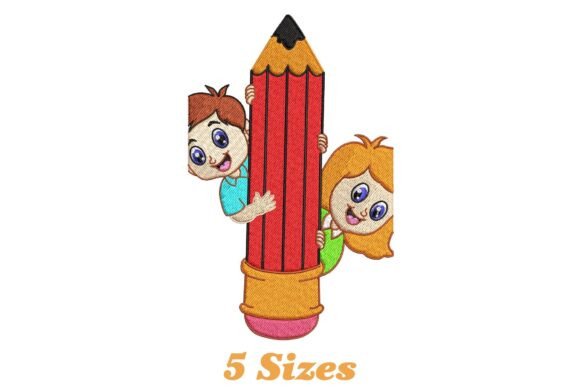
When I unzipped the machine embroidery design file for Pencil with Boys and Girls, my first thought was how perfectly it captures that playful, back-to-school energy. The design feels whimsical and cute without being overly childish—exactly the kind of balance that catches the eye of a parent browsing a handmade market booth. It’s not a sketchy, minimalist line drawing, nor is it a dense, hyper-realistic portrait. Instead, it sits in that sweet spot: decorative and friendly, with a soft, approachable charm that promises to bring personality to any fabric it touches.
As I planned my craft fair product lineup, I immediately saw this as a School category staple. The pencil motif, paired with joyful boy and girl figures, screams “teacher gift,” “first day of school,” and “proud parent.” It’s the kind of imagery that stops a customer mid-stride because it triggers a memory or a smile. In a booth environment, where you have maybe three seconds to hook someone, this design does the heavy lifting—it’s understandable at a glance, emotionally warm, and versatile enough to work on a dozen different products.
First Impressions and Booth Display Potential
Unpacking the embroidery file preview, I could already picture how it would look stitched out on a crisp tea towel or a sturdy canvas tote. The composition feels balanced: the central pencil element grounds the scene, while the figures add motion and life. For a craft fair product, this kind of clarity is non-negotiable. Customers don’t squint at your table; they scan. Pencil with Boys and Girls reads boldly from a distance, even at a moderate size, which means it works as a focal point on a pillow cover or the front of a fabric pouch. You can also scale it down for a subtle accent on a cap or a patch without losing the core idea—though I’ll get to sizing cautions in a moment.
From a brand consistency perspective, this design leans into the handmade aesthetic beautifully. It doesn’t try to look like a mass-produced iron-on. It celebrates the texture of thread, which is exactly what buyers at handmade markets pay a premium for. When I held my test stitchout up against a display of neutral-toned home decor, it added a punch of cheerfulness that made the whole table feel more curated.
Where This Design Shines: Product Ideas for Immediate Sales
Selecting the right blank is half the battle for any small shop owner. Here’s exactly where I’d place Pencil with Boys and Girls to maximize buyer engagement and finished product value.
- Tea towel embroidery: A classic. A flour sack towel in cream or soft white with this design in the corner becomes an instant teacher appreciation gift. Use a muted, vintage palette for a farmhouse vibe, or go bright primary colors for a playful classroom feel.
- Tote bag design: This is my top recommendation. A medium-weight canvas tote with the design centered on the front turns into a practical library bag, a teacher’s everyday carryall, or a reusable gift wrap. Photographs beautifully for Etsy listings because the flat surface shows every stitch.
- Apron embroidery: A child’s apron or a half-apron for an art teacher is a unique niche. The whimsical touch transforms a plain apron into a storytelling piece. Stick to smooth cotton or linen blends to avoid fabric texture interfering with the details.
- Fabric pouches and zipper bags: Small clutches or pencil cases (how fitting!) with this design on the front make quick, easy-to-produce impulse buys at a craft fair. They’re low-cost to make and high-margin when displayed in a basket.
- Pillow covers: A 16x16-inch cover with the design enlarged slightly becomes a nursery or classroom reading nook accent. The softness of the design suits a cozy, inviting atmosphere perfectly.
- Caps and patches: For a back-to-school market, an embroidered patch of this design on a backpack or a cap is a portable, modern way to sell. Caps demand careful hooping, but the curved surface can work if the design is digitized with minimal small lettering—which this one appears to be.
Photographing and Listing for Digital and Physical Sales
As an Etsy seller or boutique maker, you know that a finished product is only as good as its hero shot. Pencil with Boys and Girls photographs with a gentle, storybook quality. I always recommend using a printable mockup or a real stitchout on a simple, light-colored background to let the thread colors pop. For digital embroidery file sales, a crisp, clean mockup with the design on a tote bag and a tea towel side by side gives buyers instant versatility ideas. The whimsical nature of the design means you can stage it with crayons, wooden blocks, or a vintage schoolbook for a cohesive product listing that drives clicks.
From a commercial embroidery standpoint, the repeatability of this design is solid. It doesn’t have excessive tiny details that would slow down production or require constant thread changes. A well-digitized version will stitch out efficiently, which is key if you’re making 20 tea towels for a weekend market. I always run a test on scrap fabric first, though, to confirm the stitch density and thread colors before committing to a batch.
Practical Production Notes Every Maker Should Check
Before you load this design onto your machine, take a few precautions. I’ve learned the hard way that even the most charming file can betray you if you skip the prep work.
- Test on scrap fabric: Always, always stitch out a sample. The design’s whimsical appeal relies on clean lines; any distortion from cheap fabric or wrong stabilizer will dull the impact.
- Check thread contrast: The pencil and figures likely have multiple colors. If you’re stitching on dark fabric, the details might disappear unless you boost contrast. I’d avoid deep navy or black for this one unless you have a light-colored underlay or adjust the thread palette.
- Review spacing and tiny details: If the design includes small facial features or fingers, those can close up at smaller sizes. Don’t shrink it below the recommended dimensions without a test. I’d keep it at least 3 inches wide for a patch, and larger for a tote bag centerpiece.
- Confirm hoop size: The design should fit comfortably in a standard 4x4 or 5x7 hoop, but always verify the file dimensions. An unexpected large format can derail your production timeline.
- Inspect stitch density: Dense areas can pucker lightweight fabrics. If the pencil body has a lot of fill, use a medium-weight cutaway stabilizer even on towels, and consider a topper on textured fabrics like terry cloth.
- Use the right stabilizer: For tea towels, a tear-away with a water-soluble topper keeps the stitches from sinking in. For stretchy tote bags, a cutaway stabilizer is non-negotiable.
- Create at least one real mockup: A physical sample on your booth table is worth ten digital photos. Let customers touch the stitching and see the quality firsthand.
- Compare fabric colors: The design’s charm changes dramatically against different backgrounds. A soft butter yellow or mint green can amplify the school theme, while a crisp white gives it a clean, modern look.
- Confirm commercial licensing: Before selling any finished products, make sure the embroidery design license allows for commercial use. Most digital files are clear about this, but double-check so your small shop stays protected.
How the Design Elevates Craft Fair and Boutique Offerings
When someone walks into your booth, they’re not just buying a product—they’re buying a feeling. Pencil with Boys and Girls delivers a sense of nostalgia, innocence, and joy. It’s a conversation starter: “Oh, this looks just like my daughter’s class!” or “What a sweet teacher gift idea.” That emotional reaction directly translates to product value and customer attention. You’re not just selling an embroidered towel; you’re selling a keepsake.
For handmade product sellers who focus on seasonal collections, this design is a no-brainer for late summer and early fall craft fairs. It slots right into a back-to-school table alongside apple-themed or ruler-themed items, but it’s also versatile enough to be a year-round gift for any educator. The School category connection is obvious, but the design’s universal appeal means it can also live in a general “family” or “kids” section of your online store.
Managing Dense Stitch Areas and Tricky Surfaces
If the digitizer has packed a lot of detail into the pencil or the figures’ clothing, you might encounter a few dense stitch areas. On a thick fabric like canvas, this is rarely a problem. On a lightweight apron or a thin cotton pouch, however, you may feel the stitches stiffen the fabric. I always run a fingertip over the back of the test stitch; if it feels like a solid plate, I’ll consider using a slightly lighter stabilizer or reducing the design size by 5% to ease the density, but only if the details remain clear.
Textured towels are another common trap. The looped surface of a terry cloth tea towel can swallow small facial features, making the figures look fuzzy. A water-soluble topper is essential here. It creates a smooth surface for the stitches, then dissolves away, leaving the design crisp and the towel absorbent. Avoid placing the design over a seam or a folded hem—those uneven surfaces can distort the alignment and ruin the whimsical look.
Curved Surfaces: Caps and Small Pouches
Putting Pencil with Boys and Girls on a cap demands a bit of finesse. The design’s horizontal orientation might work well on the front panel of a low-profile cap, but you’ll need to ensure the digitizer accounted for the curve. If it’s a flat-original file, you may see slight pulling at the edges on a curved surface. I always do a test stitch on a cap frame before promising a customer a dozen. For small pouches, the challenge is more about the opening: if you’re stitching close to a zipper, use a thin stabilizer and a needle that can handle the thickness without breaking.
Building a Booth Display Around the Design
At a craft fair, your booth display frames the perceived value of every item. I’d group all the Pencil with Boys and Girls products together on a dedicated table section, using a small chalkboard sign that reads “Teacher’s Pet Picks” or “Back to School Favorites.” Hang a tea towel on a wooden rack, drape a tote bag over a chair, and stack a few pouches in a tiered tray. The repetition of the design across different products creates a mini-collection that feels intentional and professional. It also encourages multi-item purchases: a customer might grab a tote and a matching towel as a gift set.
For digital sellers who only offer the embroidery file, the same principles apply to your listing images. Use a cohesive mockup style that shows the design on a variety of blanks, and include a close-up of the stitch quality so buyers can see the detailing. The whimsical nature of the design means you can use soft, natural lighting and a clean background to let the stitches do the talking.
Final Thoughts on Value and Versatility
After working with the design, I’m confident it’s a workhorse for any small shop product lineup. It’s not a one-hit wonder that only suits a single holiday. It’s a year-round seller that taps into the evergreen market of school, childhood, and heartfelt gifting. The machine embroidery quality, when paired with your careful production choices, will elevate a simple blank into a premium handmade good. Whether you’re stitching for a bustling craft fair, an Etsy shop, or a boutique wholesale order, Pencil with Boys and Girls earns its place in your rotation. Just remember to trust your own test stitches, choose fabrics wisely, and always let the design’s playful spirit shine through every finished piece.