6th Grade Life: Craft Fair Embroidery Design Review
There is a moment in every embroidery designer's process when a new machine embroidery design lands in the digital library and you pause to mentally walk it through your next booth setup. 6th Grade Life triggered that exact pause. The product title alone carries a wave of nostalgia, and the description promises a playful, whimsical touch that could charm a wide range of shoppers. As someone who stitches for weekend markets and handmade pop-ups, I immediately started evaluating where this design would earn its keep and where it might need a careful hand.
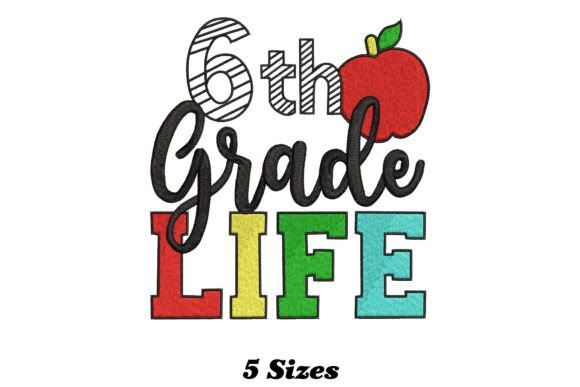
My first impression of 6th Grade Life leans playful and cute with a dash of humorous relatability. This is not a formal monogram or an elegant floral. It feels like the kind of design that makes a customer smile before they even pick up the product. The word "whimsical" in the description tells me there is likely a bouncy, lighthearted composition here, possibly with casual lettering or a doodle-style illustration that captures the chaos and charm of being in sixth grade. For a craft fair product, that emotional hook is gold. Shoppers buy feelings, and this design taps into school memories, parenting milestones, and the funny reality of middle school life.
Design Personality and Booth Appeal
At a busy craft fair, a design has roughly three seconds to catch a passerby's eye. 6th Grade Life works in that window because it likely reads as bold and friendly rather than delicate or overly intricate. The theme is specific enough to attract a niche audience, parents of middle schoolers, teachers hunting for classroom gifts, and even sixth graders themselves, yet broad enough to make sense on a variety of handmade product surfaces. The playful nature of the embroidery file suggests it will photograph well, especially when stitched in contrasting thread colors on a clean background. This matters immensely for Etsy seller listings and social media posts where the thumbnail needs to stop the scroll.
From a branding perspective, 6th Grade Life fits a maker who leans into fun, relatable, and slightly cheeky product lines. It would sit comfortably next to other school-themed or milestone designs in a booth, creating a cohesive collection that encourages multiple purchases. A customer who buys a sixth-grade tote bag might also grab a coordinating pouch or a tea towel featuring a similar vibe. The design's whimsical tone makes it a natural conversation starter at the table, and that face-to-face interaction often leads to higher conversion rates at in-person events.
Product Applications That Make Sense
When I mentally test 6th Grade Life across my standard craft fair inventory, several product types rise to the top. A tote bag design feels like the strongest candidate. Totes offer a flat, stable stitching surface, generous hoop space, and a practical use that shoppers understand instantly. A sixth-grade-themed tote becomes a peer gift, a teacher carryall, or a fun library bag. The design's playful character shines on canvas and cotton blends, and totes command a solid price point at markets.
Apron embroidery is another unexpected winner. Imagine a parent wearing a "6th Grade Life" apron while baking cupcakes for the class party. It is humorous, specific, and entirely giftable. Aprons also provide a large, smooth embroidery area that handles medium-density stitching well. For tea towel embroidery, the design could work as a center focal point or a corner accent. Tea towels are a staple at handmade markets because they are affordable to produce and easy to sell in sets. A whimsical sixth-grade design on a flour sack towel feels like a teacher appreciation gift waiting to happen.
Smaller items deserve consideration too. An embroidered patch version of 6th Grade Life could be stitched on felt or twill backing and sold as an iron-on or sew-on accessory. Patches are trending again, and they appeal to younger buyers who want to personalize backpacks and jackets. Fabric pouches and zipper bags offer a low-cost, high-volume product option. The design scaled down to fit a small pouch becomes a cute pencil case or makeup bag for a sixth grader. Pillow covers and market bags round out the lineup, giving customers a range of price points to browse.
Quick Product Ideas for 6th Grade Life
- Canvas tote bags as the hero product
- Cotton aprons for parent and teacher gifts
- Flour sack tea towels sold individually or in pairs
- Embroidered patches with iron-on backing
- Small zipper pouches for school supplies
- Throw pillow covers for bedroom decor
- Market bags as a reusable grocery option
- Unisex t-shirts for back-to-school season
Practical Production Considerations
Before committing 6th Grade Life to a full production run, I always run through a mental checklist of stitching realities. The first question is whether the design reads clearly at a glance. A playful, whimsical embroidery file often includes varied line weights, decorative elements, and possibly small lettering. If the words "6th Grade Life" are rendered in a tiny font, there is a real risk of losing clarity when stitching on textured fabrics or at reduced sizes. I would test the design at multiple scales before deciding which products get the full-size version and which receive a simplified or enlarged placement.
Stitch density is another factor that separates a smooth production day from a frustrating one. Playful designs sometimes pack dense fill areas to achieve a cartoonish or illustrated look. On sturdy canvas or denim, that density holds up beautifully. On lightweight t-shirts or thin cotton, overly dense stitching can cause puckering, warping, or a stiff hand feel that customers dislike. The right stabilizer choice becomes critical. A cut-away stabilizer supports dense designs on stretchy apparel, while a tear-away works well on woven fabrics like tea towels and aprons. I would not skip a test stitch on scrap fabric before running a single finished product.
Hoop size matters too. The description does not specify the exact hoop dimensions required for 6th Grade Life, so checking the digital embroidery file specifications before assigning it to products is essential. A design that needs a large hoop might limit placement on smaller items like caps or narrow pouches. Conversely, if the design is compact, it opens up more product possibilities but may require careful positioning to avoid looking lost on a full-size tote bag.
Thread Colors and Fabric Choices
Color selection can make or break this design's marketability. A whimsical school-themed design likely benefits from bright, cheerful thread colors that pop against neutral backgrounds. On natural canvas, white cotton, or light gray fabric, the design commands attention. On dark fabric, contrast becomes a concern. If the embroidery file uses any dark outlines or shadowing, those elements may disappear on navy or black backgrounds. I always test the design on at least three fabric colors before finalizing my booth inventory. A light heathered gray, a warm cream, and a soft pastel often provide the best balance of contrast and saleability.
Fabric texture also plays a role. Textured towels with pronounced waffle weaves or ribbing can distort fine details and make lettering look jagged. For tea towels, I prefer a smooth, tightly woven cotton that lets the design sit cleanly on the surface. On caps, the curved surface and center seam demand extra attention. A design with horizontal elements may warp across the cap's crown. Testing on a curved surface before committing to cap production saves time and wasted materials.
Booth Display and Visual Merchandising
When I picture 6th Grade Life on my craft fair table, I see it as a design that benefits from grouped displays. A cluster of products featuring the same embroidery file creates visual impact and signals to shoppers that this is a popular or signature design. I would hang a finished tote bag at eye level, fold a coordinating tea towel beside it, and prop a small pouch in front. This layered arrangement invites browsing and tells a story of how the design translates across products.
The design's playful nature also lends itself to printable mockup photography for online promotion. A well-lit flat lay showing the embroidered item alongside school supplies, a vintage lunchbox, or colorful pencils creates a lifestyle image that resonates with the target audience. For Etsy seller listings, these styled photos help communicate the product's personality and increase click-through rates. A small shop product like this thrives when the visual branding matches the whimsical tone of the embroidery itself.
Careful-Use Notes for Production
Over years of stitching for markets, I have learned to identify potential trouble spots before they become costly mistakes. With 6th Grade Life, several areas warrant attention. If the design includes small lettering, scaling it down for patches or pouches may cause the text to fill in or lose legibility. I always run a reduced-size test stitch to confirm the minimum viable size. Dense stitch areas can create a bulletproof feel on lightweight fabrics, so adjusting density or choosing a softer backing helps maintain a comfortable drape on apparel.
Thick fabrics like fleece or heavy canvas require a sharp needle and possibly a slower machine speed to prevent skipped stitches. Curved cap surfaces demand precise hooping and a design that accounts for the cap's arc. If the embroidery file was not digitized with cap stitching in mind, the results may look distorted. I recommend checking the design's specifications or consulting the digitizer before using it on headwear. For dark fabric applications, a light-colored underlay or a white thread base layer can help the top colors appear vibrant rather than muted.
Commercial Viability and Repeat Production
One of the questions I ask before adding any design to my craft fair lineup is whether it can be produced efficiently at scale. 6th Grade Life appears to be a design that stitches out consistently once the settings are dialed in. The playful theme has year-round relevance, with a natural peak during back-to-school season, teacher appreciation weeks, and holiday gifting periods. This repeatability makes it a strong candidate for batch production. I can hoop multiple tea towels or totes and run them sequentially, building inventory for both in-person markets and online orders.
From a commercial embroidery standpoint, the design's broad appeal extends beyond personal use. Boutique makers who sell finished products at wholesale or consignment can confidently pitch 6th Grade Life to gift shops, school fundraisers, and children's boutiques. The design assets, once tested and approved, become a reliable revenue stream across multiple sales channels. As always, confirming commercial licensing terms before selling finished products is non-negotiable. The product description does not explicitly outline license details, so reaching out to the design source for clarification protects your business in the long run.
Designer Recommendations Before You Stitch
Every embroidery designer develops a pre-production routine, and mine includes several non-negotiable steps. For 6th Grade Life, I would start by loading the embroidery file into my software and reviewing the stitch sequence, color stops, and estimated run time. A design that stitches efficiently without excessive trims or color changes saves valuable production hours. Next, I would stitch a test sample on mid-weight cotton using a standard cut-away stabilizer. This baseline test reveals how the design performs without fabric variables clouding the results.
After the baseline test, I move to product-specific testing. One tote bag, one tea towel, and one small pouch sample give me enough information to judge how the design translates across surfaces. I photograph each finished product in natural light, noting how the thread colors read on camera. If possible, I create at least one real mockup that I can bring to the craft fair as a display piece. Customers trust what they can see and touch, and a tangible sample builds confidence in the purchase.
Comparing fabric colors is another step I never skip. A design that looks stunning on white cotton may feel entirely different on a soft blush or sage green. Testing across a few colorways helps me decide which combinations to offer at the market. Finally, I confirm the hoop size required, review the stitch count if available, and ensure my machine's capabilities align with the design's demands. These small preparatory steps prevent the frustration of embroidery failures during crunch time before a big event.
Final Thoughts for Craft Fair Sellers
6th Grade Life brings a genuine, lighthearted energy to the craft fair table. It is not a design that tries to be everything to everyone, and that specificity is its strength. It speaks directly to a customer who remembers sixth grade fondly, or perhaps not so fondly, and wants to wear that memory with a wink. For handmade product sellers, this design offers versatility across popular items like totes, aprons, and tea towels while maintaining a cohesive brand voice. The School category placement makes sense, and the Embroidery product type signals a ready-to-stitch digital file that fits into existing production workflows.
As with any design, the real magic happens in the testing phase. Checking stitch density on your chosen fabrics, confirming thread contrast, and verifying the design's clarity at various sizes will determine whether 6th Grade Life becomes a bestseller or a one-time experiment. For my booth, I see this design claiming a permanent spot on the tote bag rack and earning its place in the teacher gift section. It is the kind of craft fair product that makes shoppers pause, smile, and reach for their wallet, and that is exactly what every maker hopes for when the market gates open.