Book Flower Embroidery Design for Business Merch
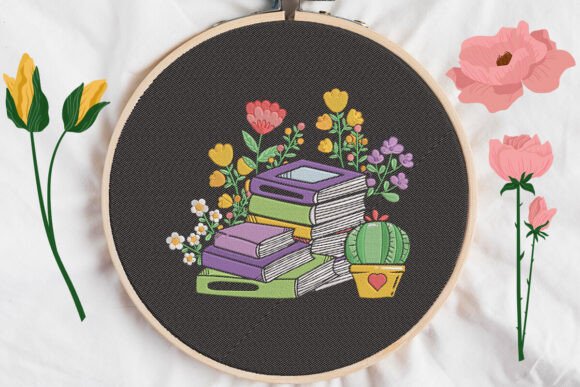
When I first opened the Book Flower design file, I saw a concept that feels both literary and organic — a blooming flower emerging from the pages of an open book. It's the kind of visual that instantly tells a story. For a small business owner, that story matters. As an embroidery designer who works with cafes, handmade shops, and independent brands, I immediately started imagining how this would stitch out on a canvas apron, a tote bag, or a chest patch. The design leans into a handcrafted, almost whimsical personality, but the linework and structure suggest it can hold up in a professional setting if the stitch file is well-digitized.
From the product description, “Transform your fabrics with a touch of charm by using this cool embroidery design,” I expected a friendly, slightly playful result. The mention of school as a category hints that this might fit a bookstore, a tutoring service, a children’s clothing line, or even a stationery brand. But a design this versatile isn’t limited to educational themes. I’ve seen similar motifs thrive on merchandise for bakeries, florists, pet brands, and creative studios. The key is how you apply it.
First Impressions: Personality and Brand Potential
Book Flower isn’t overly corporate or minimalist. It has personality — a gentle, inviting feel that could read as rustic, handmade, or boutique-chic depending on thread choices. If you’re building a brand around warmth, storytelling, or craftsmanship, this design could become a subtle signature. For a café that wants to embroider a small logo on denim aprons, or a studio that sells hand-thrown mugs with branded patches sewn onto linen pouches, this design offers a narrative that customers remember. The “flower growing from a book” imagery naturally suggests growth, knowledge, beauty, and creativity — all powerful brand values.
However, I always test a design twice: once in black and white, and once in the final thread colors. The line details around the book pages and the petals will tell you if the digitizer preserved the original charm. If the stitch density is too high, the book’s spine might pucker on lightweight fabric. If it’s too low, the flower may look sparse on a cap front. That balance is what separates a professional machine embroidery design from a decorative one.
Real Business Use Cases for Book Flower
Over the years, I’ve learned that a design’s true value is how it stitches into a finished product that a customer buys or wears. Here’s where Book Flower could shine for your small business merch:
- Embroidered patches — Sewn onto denim jackets, backpacks, or sold as standalone iron-on patches. The hand-illustrated vibe works beautifully for Etsy sellers and craft businesses.
- Staff uniforms and aprons — A small chest placement on a café apron or a bookstore employee’s shirt sleeve adds a branded, professional touch without screaming “logo.”
- Cap embroidery — On a dad hat or unstructured cap, the design could sit on the front panel or as a side accent. I’d test the size carefully — curved surfaces and dense stitching around the book edges can cause distortion.
- Tote bags and canvas pouches — A larger placement on a tote bag turns a simple utility item into a boutique product. The design feels like a handmade stamp, perfect for a creative studio’s merchandise line.
- Event merch and customer gifts — For a book launch, a workshop, or a seasonal pop-up, a small embroidered motif on a towel or a pouch becomes a memorable gift.
- Product labels and packaging accents — If you sell physical goods, an embroidered version of Book Flower on a hang tag or a fabric label adds a tactile, premium layer to your packaging.
In every case, the design’s charm comes from its illustrative quality. But for commercial embroidery, charm must meet durability. I’d stitch this on a medium-weight cotton or a poly-cotton blend first, using a cutaway stabilizer to prevent shifting. The design should hold up to frequent washing, especially on uniforms, without losing the fine petal details.
Where to Use Book Flower Carefully
Not every placement is forgiving. After years of digitizing and testing, I’ve built a mental checklist for designs like this:
- Small patch sizes — If you shrink the design below 2 inches, the book pages might close up and the flower center could become a blob. Always run a test stitch at your intended size before committing to a production run.
- Cap fronts — The seam and curvature make it tricky. If the design has a lot of small details, the center might shift and look lopsided. I’d test at 2.2 to 2.5 inches wide and use a cap-specific hoop or a fast-frame system.
- Dark uniforms — If your brand uses black or navy garments, thread contrast becomes critical. A pale flower on a dark book might read well, but the book outline might need a lighter shade to pop. I’d test the stitch density and thread colors against a dark fabric swatch before ordering dozens of polo shirts.
- High-stitch areas — If the flower center has overlapping stitches, it can become stiff. That might feel uncomfortable on a t-shirt chest. For a comfortable wear, ask your digitizer to reduce density in the center without sacrificing the visual.
- Textured fabrics — Towels, fleece, or loosely woven linens can swallow the details. I’d use a water-soluble topping to keep the stitches from sinking and to preserve the crisp lines of the book.
These aren’t deal-breakers; they’re just practical considerations. For a working embroidery file, the design’s usability depends on how well the digitizer anticipated these challenges.
How Book Flower Affects Brand Identity
When a customer sees your embroidered mark, they’re making a split-second judgment about your business. A poorly executed design can make a brand look amateur, while a thoughtfully placed, well-stitched motif builds customer trust and recognition. Book Flower, with its storybook roots, can position your brand as approachable, creative, and detail-oriented. It’s not a loud, aggressive logo; it’s a quiet, confident detail that says, “We care about the small things.”
For a handmade brand, this visual consistency across products — from a shop apron to a tote bag to a hang tag — creates a cohesive experience. I’ve seen a single embroidered design become the thread that ties a product line together. A florist could use it on sleeve cuffs, a bakery on pastry bags, a pet brand on bandanas. The design doesn’t have to be the main logo; it can be a secondary asset that adds depth.
From a buyer engagement standpoint, a design like this often sparks conversation. “Is that a book with a flower?” — that small moment of curiosity can lead to a sale or a social media share. In a crowded market, that’s a genuine advantage.
Practical Embroidery Designer Notes
Before you add the digital embroidery file to your cart or send it to production, here’s my standard workflow. I’m sharing it because I’ve learned the hard way that skipping steps costs money.
- Test in black and white first. This reveals flaws in the design’s structure. If the book looks like a solid block or the flower loses its petals, you know the digitizing needs adjustment before you play with color.
- Check how it behaves at your target patch size. I often stitch a 1.5-inch, 2-inch, and 2.5-inch sample on scrap fabric and compare. What looks delicate at 3 inches may vanish at 1.5.
- Review thread color contrast. The book’s pages, the flower petals, the leaves — each element needs to be distinct. I’d avoid using similar shades for the book and the background fabric, or the design might float unanchored.
- Inspect spacing and pull compensation. If the pages are too close together, the thread might bridge. A good digitizer will have accounted for this, but your test stitch will confirm it.
- Confirm the hoop size. The product description doesn’t specify the exact dimensions, so you’ll need to check the file’s requirements. I always verify that the design fits my most-used hoop (usually a 4x4 or 5x7) and that I have enough clearance for the fabric and stabilizer.
- Use the right stabilizer for the fabric. For uniforms, I use a medium-weight cutaway. For tote bags, a tear-away might work, but test first. For towels, both a sticky stabilizer and a topping are essential.
- Create a printable mockup for client approval. I photograph the stitched sample on the actual garment, then share it with the client. That way, there are no surprises when the full order arrives.
- Compare it beside your other design assets. This is crucial if you’re building a brand. Book Flower should sit harmoniously with your existing typography, color palette, and other motifs. I often lay out all my design assets on a single board to see if they feel like a family.
- Confirm commercial licensing. The description doesn’t explicitly state the license terms, so before you stitch it onto items for resale, reach out to the designer or platform. This is a non-negotiable step for any commercial embroidery use. You don’t want to build a product line around a file that isn’t cleared for business use.
I also recommend keeping a small notebook of stitch-out samples with fabric type, thread brand, and stabilizer used. That way, a year later, when you reorder shirts from a different supplier, you can quickly replicate the result.
Final Thoughts for Small Business Owners
Book Flower isn’t a generic shape; it’s a narrative-rich design that can elevate a brand’s visual identity when used thoughtfully. For an independent bookstore, a tutoring center, a stationery brand, or even a florist with a literary twist, it offers a focal point that feels both personal and polished. The embroidered patch potential alone makes it worth a test run, especially if you sell on Etsy or at craft fairs.
If I were to build a merchandise line around this design, I’d start with a small run of tote bags and a few caps, then gather feedback. Pay attention to how the stitch density holds up after ten washes. Check if the book corners stay sharp. Listen to customers — they’ll tell you if the design makes them feel something. In the end, that’s what a good machine embroidery design does: it turns a simple product into a finished product that carries a story. And Book Flower has a story worth telling.